
Obsidian, the Mirror Stone
Volcanic glass old enough to predate agriculture, sharp enough to have been the scalpel of choice in some modern surgeries. A careful look at its varieties, its long tradition as a mirror, and why it is one of the most honestly difficult stones in the crystal world.
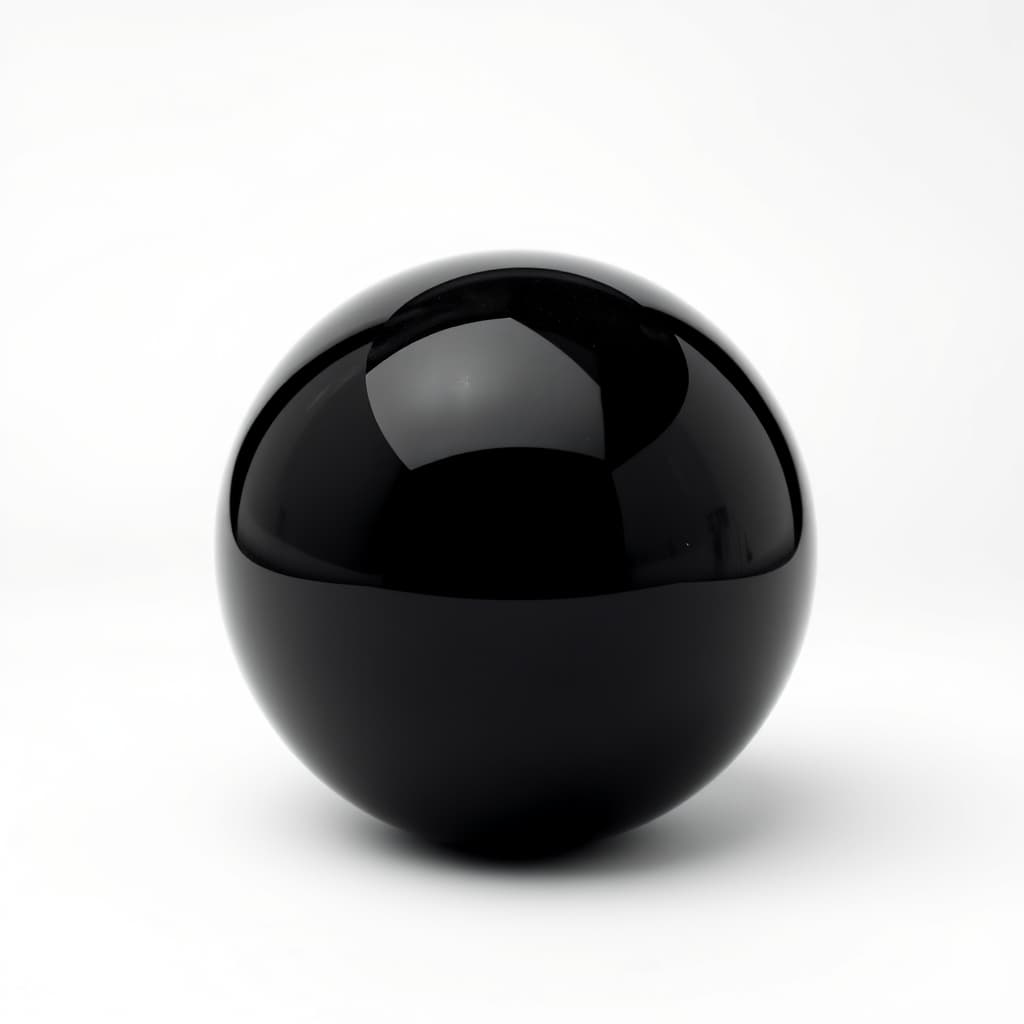
At a glance.
Quick read- ChakraRoot (Muladhara)
- Mohs hardness5 to 6
- Mineral familyVolcanic glass
- OriginMexico, United States, Armenia, Indonesia
- ColourBlack, grey, mahogany, rainbow iridescence
- ElementEarth, Fire
- ZodiacScorpio, Capricorn, Sagittarius
- Sits well withShadow work, grounding, honest reflection
- Water safeYes, handle with care due to brittleness
- Sun safeYes
- RarityCommon
Obsidian is an older stone than most of the materials in any shop that sells it. Volcanic glass formed where lava cooled too fast to crystallize, it has been knapped into knives, arrowheads, and mirrors for at least forty thousand years. Modern eye surgeons occasionally use obsidian blades for specific procedures because the edge holds an atomic sharpness that surgical steel cannot match. This is the unusual context in which any honest discussion of the stone begins. It is beautiful. It is also an edge.
What obsidian actually is
Chemically, obsidian is volcanic glass, formed when felsic lava, the silica rich kind, cools rapidly on contact with air or water without time to form a crystalline structure. The result is a supercooled liquid, technically still glass in the molecular sense, which is why obsidian breaks in characteristic curves called conchoidal fractures rather than along flat planes.
It is the same rock type as granite in composition. What makes it obsidian rather than granite is speed. Slow cooling produces granite. Fast cooling produces obsidian.
The varieties
The market sorts obsidian into several named types, each with its own visual character and tradition.
| Variety | Appearance | What gives it character | Common uses |
|---|---|---|---|
| Black obsidian | Deep jet black, glossy | Pure volcanic glass | Scrying mirrors, polished spheres |
| Snowflake obsidian | Black with white radial inclusions | Cristobalite crystallization | Beads, tumbled stones |
| Mahogany obsidian | Black with red brown streaks | Iron oxide inclusions | Tumbled, carved figurines |
| Rainbow obsidian | Black with iridescent sheen in light | Microscopic magnetite layers | Cabochons, collector pieces |
| Apache tears | Small rounded black nodules | Natural weathering of obsidian | Pocket stones, grief work |
Rainbow obsidian is the one most people do not realize they are looking at. In normal indirect light it reads as plain black. Angle it toward a strong light and bands of green, purple, or gold rise up out of the surface. It is one of the most quietly dramatic stones in the mineral world.
The long tradition
Obsidian has been used for tools for at least forty thousand years, with archaeological sites across the Americas, the Mediterranean, East Asia, and the Pacific showing continuous use. The oldest known obsidian trade routes in the Mediterranean date to roughly 12000 BCE, older than pottery, older than agriculture.
As a mirror, obsidian was polished by the Aztecs into disks used for both practical reflection and a divinatory practice called scrying. The British Museum holds an Aztec obsidian mirror that was later used by the Elizabethan occultist John Dee for his own scrying work, a strange and delightful accident of history that tells you something about how deeply the stone has been associated with looking into things.
The modern crystal association with shadow work, honest self examination, and ruthless truth comes directly from this older mirror tradition. Whatever metaphysical weight you place on it, the stone has been used to help people look at themselves for a very long time.
A real caution. Obsidian is often recommended for shadow work, meaning the kind of inner examination where difficult material surfaces. If you are working through trauma, grief, or serious mental health material, do that work with a therapist. A stone is a companion to the process at best. Do not use it as a substitute for professional support.
Chakra and symbolic framing
Obsidian is most commonly paired with the root chakra (Muladhara), with some traditions extending the association to the sacral and solar plexus depending on the variety. The grounding quality of the black stone is the through line.
The symbolic framing across most sources is consistent. Obsidian is not a comforting stone. It is a clarifying stone. The tradition describes it as unflinching, honest, and occasionally uncomfortable. If you are in a period of life that calls for gentleness, this is probably not the crystal to reach for first. If you are in a period that calls for honest looking, it is.
Living with a piece
Four approaches that honour the stone's character.
A small polished piece on a desk. The traditional placement for honest work. Something about the visual weight of a black stone on a writing surface reinforces the practice.
A held stone during hard reflection. When thinking through something difficult, holding an obsidian in the palm gives the mind something literal to rest on while sitting with uncomfortable material.
A scrying mirror, if you are drawn to that practice. Polished obsidian disks are available from specialist sellers. The practice is simple, quiet, and does not require belief in anything mystical to be useful as a focus exercise.
Paired with selenite or clear quartz. The pairing is traditional and balances the stone's severity with something lighter. Many practitioners keep them together specifically to avoid over relying on obsidian alone during hard periods.
Caring for obsidian
Three practical notes.
It is brittle. Obsidian is a glass. It chips under sharp impact. A dropped polished sphere on a tile floor can crack. Store carefully.
The edges are sharp. Broken obsidian can cut skin. If a piece chips, handle the fragments with care and dispose of them safely.
It is water safe. Water does not damage obsidian. Just avoid boiling water or thermal shock, which can crack the stone along internal fractures.
Buying honestly
Two quick notes.
Check the shine. Real polished obsidian has a deep, glossy, almost wet looking finish. Cheap glass imitations look cloudy or have a slight milky sheen. A reputable seller will confirm volcanic origin in the description.
Origin matters less than with other stones. Obsidian is obsidian, regardless of source. The specific varieties (snowflake, mahogany, rainbow) come from specific deposits, but plain black obsidian from Mexico, Armenia, or Iceland is essentially interchangeable.
A closing thought
Obsidian earns its reputation the hard way, by being genuinely useful for the kind of work most other crystals flinch from. If you are going through a season that wants honest looking rather than comfort, it is the right companion. If you are going through a season that wants gentleness, pick up rose quartz or moonstone instead and come back to this one later. The stone does not demand to be used, which is part of what makes it worth owning.
A few honest questions.
What is the difference between obsidian and black tourmaline?
They look similar and do different things. Obsidian is volcanic glass with a smooth conchoidal fracture. Black tourmaline is a silicate mineral with a ribbed striated surface. Tourmaline is denser and harder. Obsidian can be polished to a mirror shine, tourmaline cannot.
Is obsidian actually glass?
Yes, volcanic glass. When lava cools quickly without crystallizing, you get obsidian. Chemically it is similar to granite, but the molecular structure is amorphous rather than crystalline, which is why it breaks in curves and takes an edge sharper than a surgical scalpel.
What is snowflake obsidian?
Black obsidian with white radial inclusions of cristobalite that look like snowflakes scattered through the stone. The inclusions formed as small pockets of the glass slowly crystallized after cooling.
Are Apache tears the same as obsidian?
Yes, Apache tears are small rounded obsidian nodules, typically black with some translucency. The name comes from a nineteenth century Apache legend and has stuck as the trade name for this specific form.
Keep reading.
Black Tourmaline, the Stone People Ask For When Life Is Loud
The protective stone in almost every tradition that touches black stones. A look at what tourmaline actually is, why practitioners recommend it for overwhelm, and how to tell polished tourmaline from dyed obsidian.
Smoky Quartz, the Quiet One
A brown grey quartz formed by natural radiation over geological time. A careful look at its real origin, why Scotland adopted it as a national stone, and the distinction between natural smoky quartz and the irradiated material that dominates the cheap end of the market.
Scorpio Crystals, Water Depth and Honest Shadow
The eighth zodiac sign carries the deep Mars water tradition. Intensity, transformation, the capacity to sit with what others avoid. The stones that pair with Scorpio honour the depth without performing darkness.
Mentioned in
Sit with us on Sundays.
One quiet letter every week. New writing, a crystal to consider, and whatever we have been thinking about. No tracking pixels, no affiliate noise.
By subscribing you agree to receive weekly emails from AU Crystals. Unsubscribe anytime. See our privacy note.