
Moonstone, and the Soft Kind of Strength
A stone that glows from the inside in the right light. Where adularescence comes from, why rainbow and blue moonstone are different creatures, and the long tradition of carrying one during change.
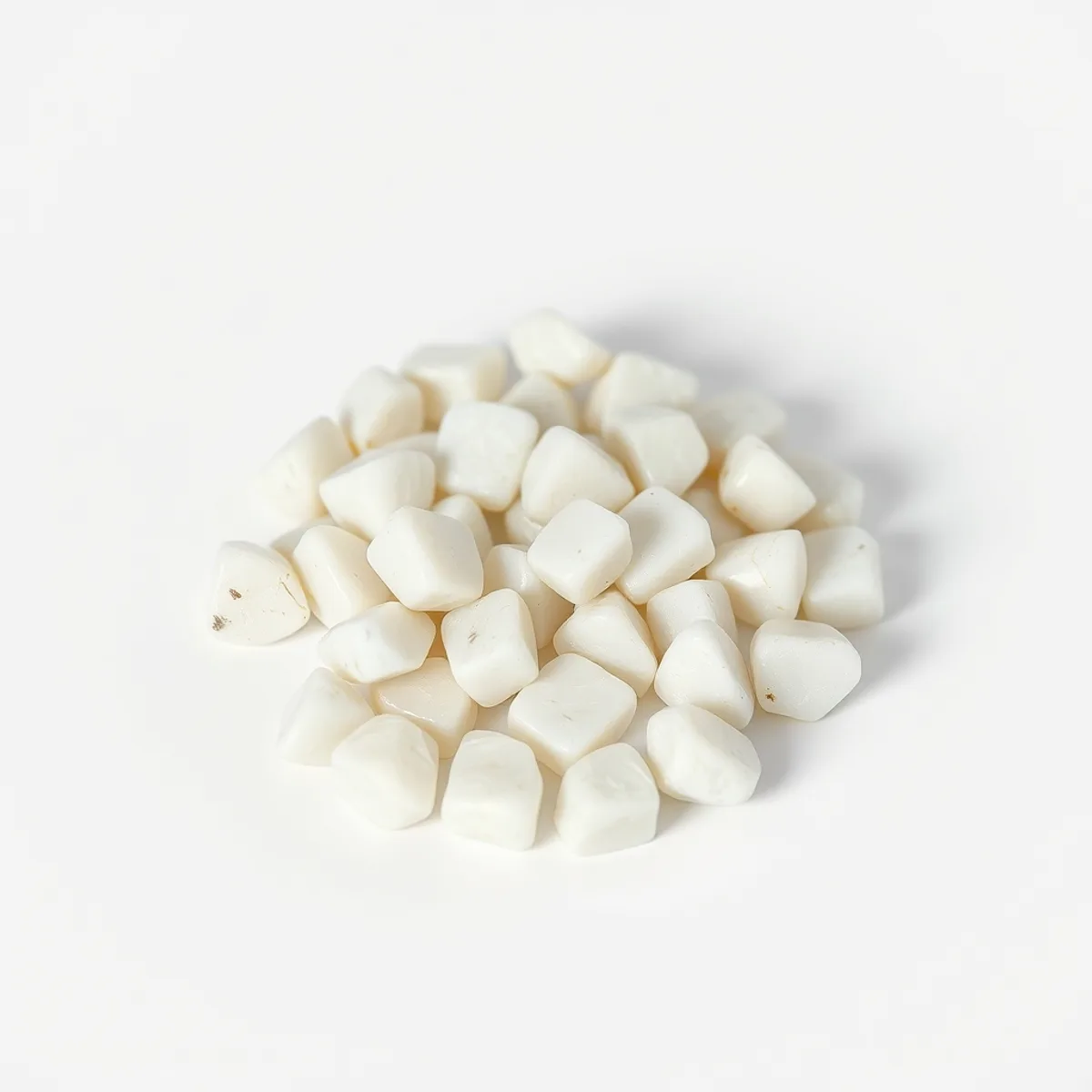
At a glance.
Quick read- ChakraCrown (Sahasrara), Sacral (Svadhisthana)
- Mohs hardness6 to 6.5
- Mineral familyFeldspar
- OriginSri Lanka, Myanmar (blue), India (rainbow)
- ColourMilky white with blue or rainbow sheen
- ElementWater
- ZodiacCancer, Libra, Scorpio
- Sits well withCycles, intuition, emotional honesty
- Water safeYes, avoid thermal shock
- Sun safeYes
- RarityCommon, fine blue moonstone is uncommon
Moonstone has the quietest kind of glow of any commonly available stone. It sits in your hand, looks like a piece of frosted glass, and then with one small tilt a soft light rises through the surface as if something inside were waking up. This is the effect the Romans called astrion, the star stone. Pliny the Elder wrote about it in the first century, and nearly every culture that has had moonstone has given it some version of the same association with the quieter, more cyclical parts of life.
The science of the glow
The phenomenon is called adularescence, named for Mount Adular in the Swiss Alps where early specimens were studied. The effect arises from alternating thin layers of two feldspar compositions, orthoclase and albite, stacked through the crystal. When light enters, each layer reflects a small portion, and the layers collectively scatter the returning light in a way that produces the billowy inner glow rather than a point reflection.
It is closely related to labradorescence in labradorite, but the sheen moves differently. Labradorite flashes in sheets. Moonstone billows like smoke moving slowly through glass.
Varieties and how the market actually sorts them
This is where a little clarity helps, because the names get tangled.
| Name | What it actually is | Origin | What to expect |
|---|---|---|---|
| Blue moonstone | Orthoclase feldspar with strong blue adularescence | Sri Lanka, Myanmar | Classic translucent body with a rising blue sheen |
| White moonstone | Orthoclase with softer, silvery sheen | Various | Gentle glow, widely available, entry price |
| Rainbow moonstone | White labradorite, not actual moonstone | India | Pale body with multi colour flash |
| Peach moonstone | Orthoclase with peach or apricot tone | India, Madagascar | Warm body, gentle sheen |
| Grey moonstone | Orthoclase with cat eye or star effect | India | Smoky body, sometimes shows asterism |
Rainbow moonstone is the most commonly misnamed piece in the market. It is not technically moonstone. It is white labradorite. The piece is still lovely, but if you specifically want the Sri Lankan blue sheen, ask for blue moonstone by name and by origin.
The long tradition
Moonstone has been associated with the moon across cultures that had no contact with each other, which usually indicates the association is driven by the stone itself rather than cultural exchange. The milky body, the soft inner light, and the way the sheen rises and disappears with movement all suggest the moon in an almost literal visual way.
In Ayurvedic and classical Indian traditions, moonstone has been considered sacred for thousands of years and is closely tied to feminine cycles, emotional intelligence, and dream practice.
In modern crystal work, moonstone is most often associated with the crown and sacral chakras. The crown association draws on the intuitive and dreamlike qualities. The sacral association draws on the cyclical, bodily, emotional threads of the tradition.
An honest note. If you are tracking cycles for fertility, menstrual health, or any reproductive question, please work with a clinician. Moonstone is a beautiful symbolic companion. It is not a medical tool.
Practical ways to use one
Four approaches that feel natural.
As a pendant worn close to the sternum. This is the traditional placement. Pendants outlast rings on moonstone because they avoid direct knocks.
By the bedside during cycles of change. Whether you track the lunar month, menstrual cycles, work rhythms, or emotional seasons, moonstone is a visual reminder that change is a rhythm rather than a disruption.
As a touchstone during hard conversations. This is one of the stones people specifically mention carrying when they need to speak something difficult with kindness. The soft weight in the pocket becomes a cue to slow down before speaking.
In meditation paired with slow breath. No specific technique required. Hold the stone, rest it on your sternum or in your lap, and let the attention settle. Moonstone does not demand a practice. It rewards a pause.
Caring for moonstone
Three durability notes.
It is softer than quartz. Store moonstone separately from harder stones. A mixed drawer of jewelry will scratch a moonstone pendant over months of contact.
It has cleavage, similar to labradorite. Sharp impact can cause a clean split. Handle with more care than you would a tumbled quartz.
It is thermally sensitive. Do not run it under hot water. Do not leave it in a sunny car. The temperature gradient can cause internal fractures that reduce the glow.
Beyond that, a soft cloth and room temperature water clean it beautifully.
Buying with clear eyes
Three quick checks.
Look at the light source in seller photos. If every image uses a strong directional light, the stone will look less glowing in normal light. Ask for an ordinary room light photo as a companion shot.
Ask for origin. A seller who says Sri Lankan blue moonstone should be able to confirm the source. A seller who hedges is selling rainbow moonstone or Indian orthoclase, both of which are fine but should not cost blue moonstone prices.
Check for fractures. Small internal inclusions are normal and often beautiful. Wide fractures that run across the stone weaken it and will grow with time.
A closing thought
Moonstone earned its reputation the slow way, through millennia of people quietly keeping one close during the cycles of their lives. It is not the stone for drama or dramatic practice. It is the stone for the softer kind of strength, the kind that notices what needs noticing and says nothing about it. Keep one somewhere you will see it in low light at the end of the day. That is the whole practice.
A few honest questions.
What is the difference between blue moonstone and rainbow moonstone?
Blue moonstone is traditional moonstone from Sri Lanka and Myanmar with a distinct blue sheen. Rainbow moonstone is technically white labradorite from India, showing similar but more colourful flash. Both are lovely. They are different minerals sold under overlapping names.
Why does my moonstone look cloudy?
A mild milky interior is normal and often desirable. It is what gives moonstone the soft glow. Heavy fractures or chalky zones are a durability concern, but gentle cloudiness is just the stone being itself.
Can moonstone be worn daily?
Yes with care. Moonstone sits around 6 to 6.5 on the Mohs scale, softer than quartz, and has cleavage planes that can chip under impact. Rings take the most abuse and are the most likely to show wear. Pendants and earrings last longer.
Is moonstone associated with any particular astrological sign?
Cancer most prominently, for the lunar association. Also Libra and Scorpio in various traditions. The through line is emotional sensitivity and the ability to read a room.
Keep reading.
Labradorite, the Stone That Only Shows Itself When It Wants To
A grey stone in the drawer, a fire in the sun. A careful look at labradorescence, the science of why it flashes, and the quiet tradition of keeping it close during transitions.
Rose Quartz, Honestly
Most of what gets written about rose quartz is a bit breathless. Here is a quieter guide, with the geology, the tradition, and a few honest notes on what crystal skincare can and cannot do.
Aquamarine, the Stone Sailors Carried
Pale blue beryl, the same mineral family as emerald, carved into amulets by sailors who needed the sea to stay gentle. The mineralogy, the long maritime tradition, and why it reads as one of the calmest stones in daily wear.
Mentioned in
Sit with us on Sundays.
One quiet letter every week. New writing, a crystal to consider, and whatever we have been thinking about. No tracking pixels, no affiliate noise.
By subscribing you agree to receive weekly emails from AU Crystals. Unsubscribe anytime. See our privacy note.