
Howlite, and the Dyed Turquoise Problem
A white marbled stone often dyed blue and sold as turquoise. How to spot the imposter, why genuine howlite is worth keeping around, and the surprisingly calm tradition built around the real stone.
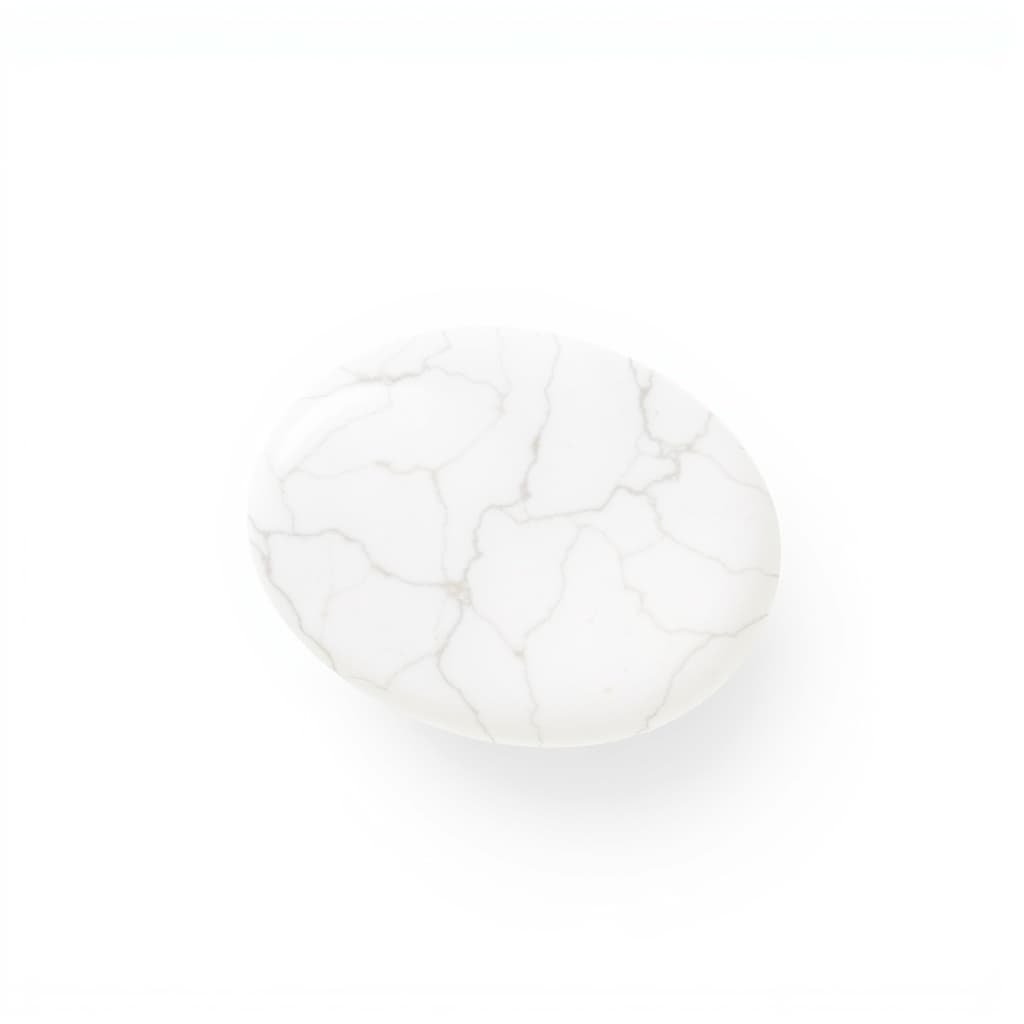
At a glance.
Quick read- ChakraCrown (Sahasrara), Third Eye (Ajna)
- Mohs hardness3.5
- Mineral familyBorate
- OriginCanada, United States, Mexico
- ColourWhite with grey web-like veining
- ElementAir
- ZodiacGemini, Virgo
- Sits well withSleep, patience, quiet thought
- Water safeShort contact only
- Sun safeDyed pieces may fade
- RarityCommon
Howlite has two lives. As itself, it is a quiet white stone with delicate grey veining, soft enough to scratch with a coin, and one of the cheaper crystals in any shop. As a dyed substitute for turquoise, it is one of the most commonly misrepresented stones in modern jewelry commerce. Both lives are worth understanding.
What howlite actually is
Howlite is a calcium borosilicate hydroxide, Ca2B5SiO9(OH)5, in the borate mineral family. It was first identified in 1868 in Nova Scotia by Canadian mineralogist Henry How, which is where the name comes from. It forms in sedimentary evaporite deposits, often alongside gypsum.
The natural colour is white to pale grey, with distinctive black or grey veining that runs through polished surfaces in a web-like pattern. The veining is characteristic enough that even heavily dyed pieces show it through the colour.
The turquoise substitute problem
Howlite is porous. It takes dye exceptionally well. Dipped in turquoise-blue dye, polished, and sold, it closely resembles natural turquoise at a glance. The telltale signs are still visible to anyone paying attention.
| Test | Howlite (dyed blue) | Natural turquoise |
|---|---|---|
| Hardness | 3.5 Mohs, a coin scratches it | 5 to 6 Mohs, much harder |
| Veining pattern | Grey webbing under the dye | Copper/iron patterns, brown or black |
| Dye transfer | Acetone swab picks up blue | No transfer |
| Weight | Lighter | Noticeably denser |
| Price | Very cheap | Mid to premium |
A "turquoise" bracelet costing ten dollars is almost certainly dyed howlite. Nothing wrong with that, if labeled honestly. The frustration is at premium prices.
The honest howlite tradition
Modern crystal tradition treats undyed howlite as a calming stone, specifically associated with:
- Sleep as a bedside cue
- Patience for slow situations
- Quiet thought during anxious periods
The modern associations are recent (howlite has only been on the commercial market for about a century). There is no ancient tradition to draw on. What the tradition does have, honestly, is a hundred years of people finding the white-and-grey veining soothing to look at and keeping a piece nearby.
Honest reframe. Howlite does not have the weight of rose quartz tradition or the pigment history of lapis. What it has is affordability, visual calm, and wide availability. That is sometimes enough.
Living with a piece
Three uses.
On a bedside table. The classical placement. The white stone reads as quiet in low light.
In a pocket during patient waiting. Doctor's waiting rooms, long administrative calls, slow travel.
As a soap-shaped worry stone. Howlite is soft and shapes well. Hold and rub the surface during anxiety spikes.
Caring for howlite
Soft. Handle carefully. Dry cloth cleaning. Avoid hot water and strong sunlight for dyed pieces. Store separately from harder stones that will scratch it quickly.
A few honest questions.
Why is howlite often sold as turquoise?
Howlite is white with grey veining. Dyed a specific blue, it closely resembles genuine turquoise, which is a much more expensive stone. Much of the cheap "turquoise" on the fast-fashion jewelry market is actually dyed howlite. The practice is legal when labeled honestly and fraudulent when not.
How do I tell dyed howlite from real turquoise?
Howlite is softer (3.5 on Mohs versus turquoise at 5-6) and shows characteristic white-and-grey marbling under the dye. Real turquoise has copper-and-iron veining in brown, black, or gold patterns, not the grey web pattern of howlite. Scratch test on an inconspicuous edge confirms hardness.
Does howlite genuinely help with sleep?
Sleep research does not support direct effects from any stone. What howlite can provide is a consistent bedside visual cue, which does real behavioural work in establishing a wind-down routine. Keep it by the phone charger so reaching for one means reaching for the other.
Can howlite go in water?
Short contact only. Howlite is soft (3.5 Mohs) and dyes can leach in water if the piece was enhanced. Dry cloth cleaning is safest.
Keep reading.
Selenite, the Delicate One
Soft enough to scratch with a fingernail, translucent enough to look lit from within. A careful guide to a stone that asks for more care than most, and why the traditional charging practice makes more sense than it might first appear.
Moonstone, and the Soft Kind of Strength
A stone that glows from the inside in the right light. Where adularescence comes from, why rainbow and blue moonstone are different creatures, and the long tradition of carrying one during change.
Rose Quartz, Honestly
Most of what gets written about rose quartz is a bit breathless. Here is a quieter guide, with the geology, the tradition, and a few honest notes on what crystal skincare can and cannot do.
Sit with us on Sundays.
One quiet letter every week. New writing, a crystal to consider, and whatever we have been thinking about. No tracking pixels, no affiliate noise.
By subscribing you agree to receive weekly emails from AU Crystals. Unsubscribe anytime. See our privacy note.