
Labradorite, the Stone That Only Shows Itself When It Wants To
A grey stone in the drawer, a fire in the sun. A careful look at labradorescence, the science of why it flashes, and the quiet tradition of keeping it close during transitions.
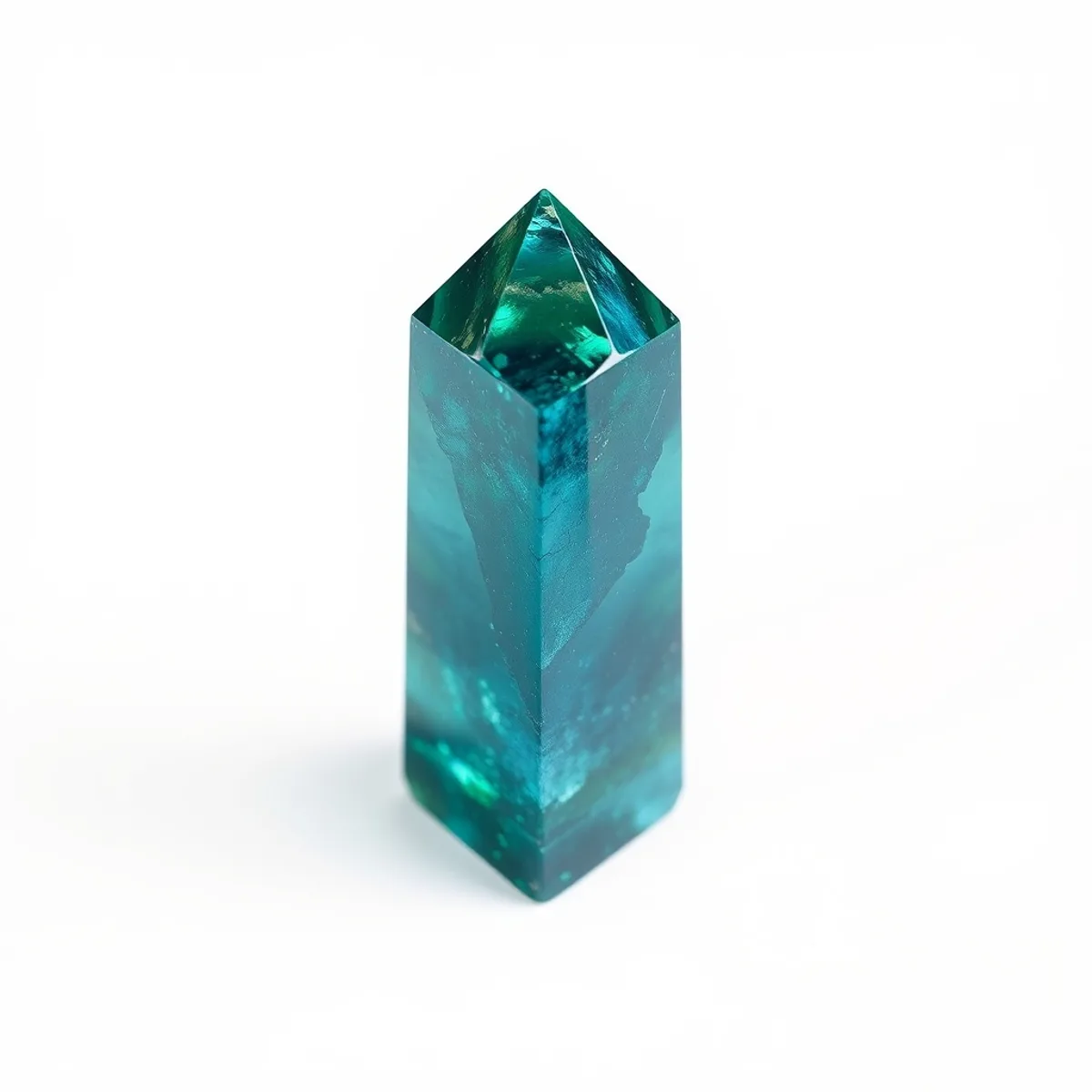
At a glance.
Quick read- ChakraThird Eye (Ajna), Throat (Vishuddha)
- Mohs hardness6 to 6.5
- Mineral familyFeldspar (Plagioclase)
- OriginLabrador, Madagascar, Finland, Russia
- ColourGrey to almost black with blue, green, gold flash
- ElementWater, Air
- ZodiacLeo, Scorpio, Sagittarius
- Sits well withTransitions, intuition, quiet magic
- Water safeYes, avoid thermal shock
- Sun safeYes
- RarityCommon, spectrolite is uncommon
Labradorite is the stone that usually disappoints on first sight and keeps people the longest. In the shop it looks grey, mottled, almost industrial. Then someone tilts it toward the light and a sheet of electric blue fires out of the surface like something waking up. Once you have seen a piece flash, you understand why traditions all over the circumpolar north talk about this stone as a keeper of secrets.
What makes the flash happen
The optical effect is called labradorescence. It is not an ordinary reflection. The stone is made of alternating microscopic layers of two slightly different feldspar compositions. When light enters, each layer reflects a small portion back at a specific wavelength, and the waves interfere with each other on the way out.
The result depends on the spacing of those layers. Thicker layers produce blue. Thinner layers produce gold or peach. When a single stone contains variation across its volume, a rotation in the light can fire through several colours in sequence.
This is also why cut matters so much. The microscopic layers run in a specific direction through the raw crystal. A lapidary who cuts against the grain produces a dull piece. A cutter who aligns the polish face parallel to the layers produces a piece that flashes edge to edge. Two stones from the same boulder can look wildly different because of a decision made at the saw.
Grades and what to look for
A rough comparison across the common market tiers.
| Tier | Appearance | Typical origin | Common forms |
|---|---|---|---|
| Entry | Patchy blue flash, visible grey zones | Madagascar | Tumbled, palm stones |
| Mid | Strong blue or green flash across most of face | Madagascar, Russia | Towers, spheres, cabochons |
| Spectrolite | Multi colour flash, often full spectrum | Finland | Collector cabochons |
If you are buying online, ask for a short video under rotating light rather than still photos. Photos consistently overstate flash because sellers angle the stone to maximum effect. Video under simple rotation tells you what you will actually see on your shelf.
The tradition
Inuit legend holds that the northern lights were once trapped inside stones along the Labrador coast until a warrior struck them free with a spear, and the remaining flashes are still visible today in the rock left behind. Whatever you make of that, the association of labradorite with liminal states, threshold moments, and quiet inner transformation runs through nearly every source that mentions it.
In modern practice, labradorite is usually paired with the throat and third eye chakras. The throat association relates to finding the right words. The third eye relates to trusting what you sense before you can articulate it. For people moving through a significant life transition, especially the kind where the direction is clear but the words for it have not arrived yet, labradorite is often the stone that gets recommended first.
A small caution. Like every stone, labradorite is not a substitute for counseling, medical care, or an honest conversation with someone you trust. It is good company during transitions. It is not the guide.
Living with a piece
Four small practices that feel natural with this stone.
In a pocket during a difficult week. A tumbled labradorite becomes a touchstone for the kind of hard where you know something is shifting but you cannot yet name it. The weight in your hand is the reminder.
On a desk or windowsill where light moves through the day. Labradorite is one of the very few stones that rewards being placed specifically in a spot with changing light. Morning sun, afternoon shadow, evening lamp, each angle reveals a different face.
In a quiet meditation where you simply hold it and tilt. No intention required. The act of watching the flash appear and disappear is its own settling practice.
As jewelry, particularly a pendant. Cabochons catch and release flash as you move, which makes labradorite unusually rewarding as a worn stone.
Caring for it
Three notes on durability.
Labradorite has cleavage, which means it can split along internal planes if struck. Drop a tumbled piece on hardwood and it usually survives. Drop a thin cabochon onto tile and it can crack cleanly.
It does not fade in sun, unlike amethyst or citrine. Direct sunlight is fine.
Water is fine for short contact. Avoid hot water entirely, avoid soap with strong alkalis, and do not leave labradorite jewelry in a shower rotation.
The practical honesty
Labradorite is one of the easier stones to oversell because the flash photographs so well. Sellers know this. If a listing uses only tightly angled shots under directional lighting, you are looking at the best possible version of that stone. The stone on your shelf will flash less.
This is not a scam so much as a photographic reality. The fix is simple. Ask for honest video. Ask for the stone under ordinary room light alongside the dramatic angled shot. A trustworthy seller will provide both without pushback.
A closing thought
There is a reason labradorite shows up in almost every list of stones for people going through change. The flash that comes and goes depending on angle is such a perfect metaphor for what transitions feel like from the inside that you almost do not need the mineralogy to understand the appeal. Keep a piece where you can see it from more than one angle. Let it show you something different on different days. That is the entire practice, and it is already plenty.
A few honest questions.
Why do some labradorite pieces flash and others do not?
The flash, called labradorescence, comes from light bouncing between microscopic internal layers of the mineral. The angle of those layers relative to the cut determines how much light escapes back to the eye. A well cut piece flashes dramatically. A poorly cut piece from the same specimen can look grey and flat.
What colours can labradorite flash?
Most commonly blue, but also green, gold, peach, and occasionally the rare purple or red called spectrolite. Spectrolite specifically refers to full spectrum flash and comes almost exclusively from Finland.
Is labradorite safe in water?
Yes for short contact, but labradorite has cleavage planes that can split if it is dropped or thermally shocked. Avoid hot water, avoid prolonged salt water, and handle with more care than you would a quartz piece.
Is spectrolite worth the extra cost?
If you specifically love multi colour flash, yes. If you already own a good blue flash piece, probably not. Spectrolite commands high prices because Finnish deposits are limited, not because the stone is mineralogically different.
Keep reading.
Moonstone, and the Soft Kind of Strength
A stone that glows from the inside in the right light. Where adularescence comes from, why rainbow and blue moonstone are different creatures, and the long tradition of carrying one during change.
Amethyst, at Closer Range
The stone most people meet first. A slower look at where it comes from, why Brazilian and Uruguayan pieces look so different, and what sleep research can and cannot say about keeping one by the bed.
Rose Quartz, Honestly
Most of what gets written about rose quartz is a bit breathless. Here is a quieter guide, with the geology, the tradition, and a few honest notes on what crystal skincare can and cannot do.
Sit with us on Sundays.
One quiet letter every week. New writing, a crystal to consider, and whatever we have been thinking about. No tracking pixels, no affiliate noise.
By subscribing you agree to receive weekly emails from AU Crystals. Unsubscribe anytime. See our privacy note.