
Moss Agate, the Gardener's Stone
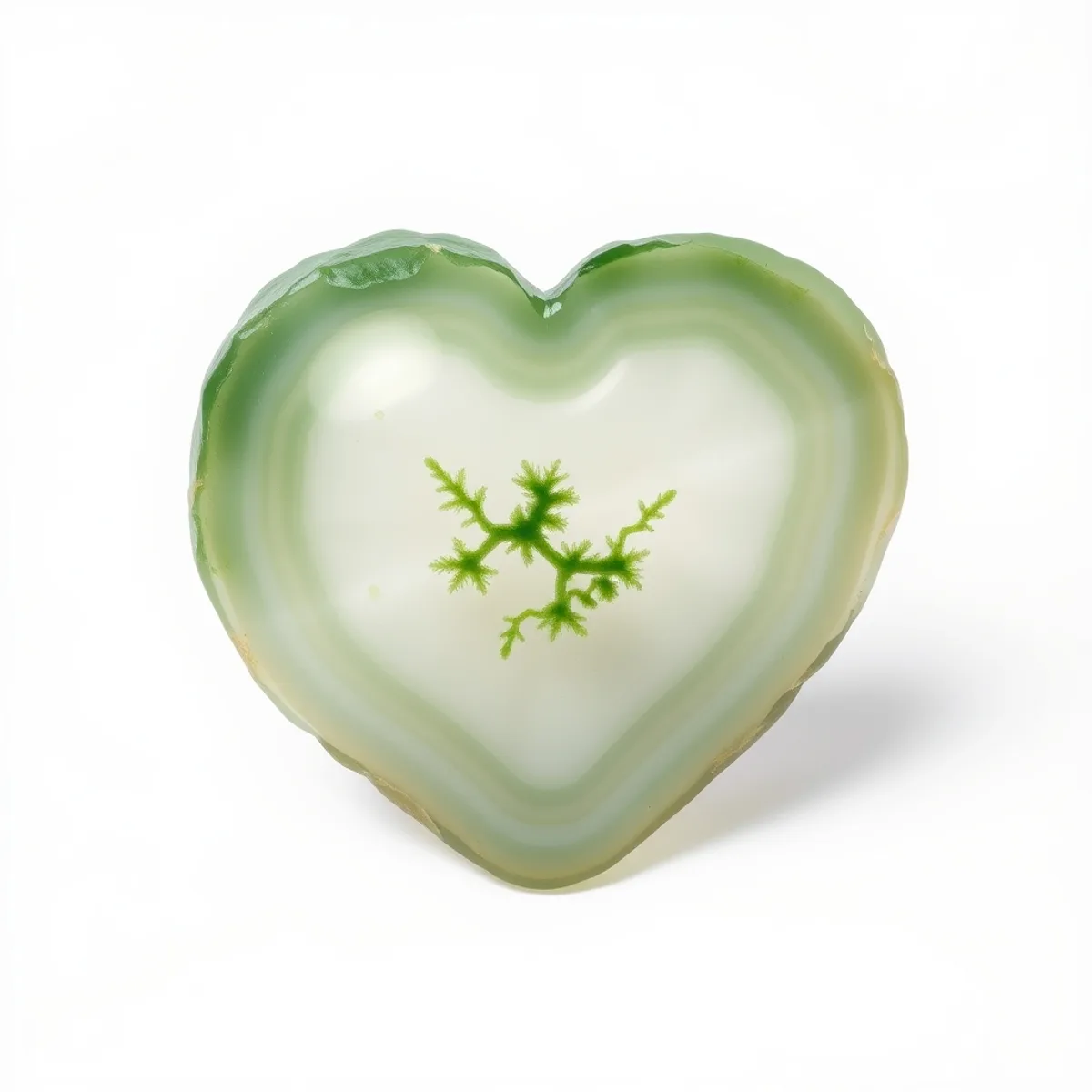
Not technically an agate and not technically mossy, but one of the loveliest stones to hold against a window. Where the green dendrites come from, and the long association with gardens and slow growth.
At a glance.
Quick read- ChakraHeart (Anahata), Root (Muladhara)
- Mohs hardness6.5 to 7
- Mineral familyChalcedony (dendritic)
- OriginIndia, Brazil, United States, Uruguay
- ColourTranslucent with green or brown mineral dendrites
- ElementEarth
- ZodiacVirgo, Taurus
- Sits well withPatience, gardening, slow creative work
- Water safeYes
- Sun safeYes
- RarityCommon
Moss agate is the most optically surprising stone in the common crystal market. Hold a slice against a window and the translucent background lights up around suspended green shapes that look for all the world like tiny ferns pressed in glass. They are not ferns, never were, but the illusion is one of the reasons this stone has been kept close by people who work with growing things for at least a thousand years.
What moss agate actually is
Chemically, moss agate is chalcedony, a cryptocrystalline form of quartz. The defining feature is the dendritic inclusions, branching mineral structures of manganese oxide or iron oxide that grew through hairline fractures in the stone during formation.
The dendrite patterns are produced by a phenomenon called diffusion-limited aggregation, the same fractal branching that produces tree lightning shapes, frost patterns on glass, and snowflakes. Mineral solutions following pressure gradients through fine cracks naturally grow in branching forms. The result happens to look exactly like plant tissue, which is the coincidence that earned the stone its name.
The gardening tradition
Medieval European and English folk tradition associated moss agate with agricultural success. Farmers carried small pieces in their pockets during planting. Stones were placed in fields at the beginning of growing seasons. Midwives in parts of Britain carried moss agate for patience during long labours.
The consistent thread across these traditions is slow growth. Not luck in the gambling sense, but the kind of quiet support that matches the pace of something that takes weeks or months to reveal itself.
The chakra association
Moss agate is most commonly paired with the heart chakra, with the root chakra as a secondary association for its earthy quality. The heart pairing draws on the green colour and the tradition of nurturing. The root pairing draws on grounded, seasonal patience.
Quiet truth. If you are starting a garden, a creative project, or a recovery, moss agate is a fine companion. What it will not do is accelerate anything. Its tradition is about staying with slow work, not making it fast.
Living with a piece
Three gentle practices.
On a windowsill where morning light passes through. This is the single best way to experience moss agate. The dendrites come alive only in backlight.
In a pocket during patient projects. Writing a book, learning an instrument, growing tomatoes, anything that rewards weekly rather than daily attention.
As a pendant. Handles daily wear well, and the colour sits quietly against most clothing.
Caring for it
Durable. Water safe. Sun stable. The dendrites are internal, not surface inclusions, so they cannot be worn away. A soft cloth is all the cleaning it needs.
A closing thought
Moss agate is the gentlest of the agate family. No drama, no sparkle, no flash. Just the quiet surprise of what looks like a frozen garden inside a stone. Keep one where the light finds it. Wait. Small things change in their own time.
A few honest questions.
Is moss agate actually an agate?
Technically no. True agate has banded chalcedony. Moss agate is chalcedony without bands, with dendritic mineral inclusions that look like moss or ferns. The name stuck through trade tradition even though mineralogists would classify it as dendritic chalcedony.
What are the green patterns actually made of?
Dendrites formed by manganese or iron oxide minerals growing through hairline cracks in the chalcedony during formation. They look plant-like because fractal branching is common in mineral crystallization, not because they were ever living.
Is moss agate safe to wear daily?
Yes. At 6.5 to 7 on the Mohs scale it handles daily wear well. Pendants and bracelets are common and durable.
Why is it called the gardener's stone?
Old European tradition associated moss agate with successful planting and crop growth. Farmers carried it or placed it in fields. Whether you take the claim literally, the stone has a long track record as a companion object for patient growing work.
Keep reading.
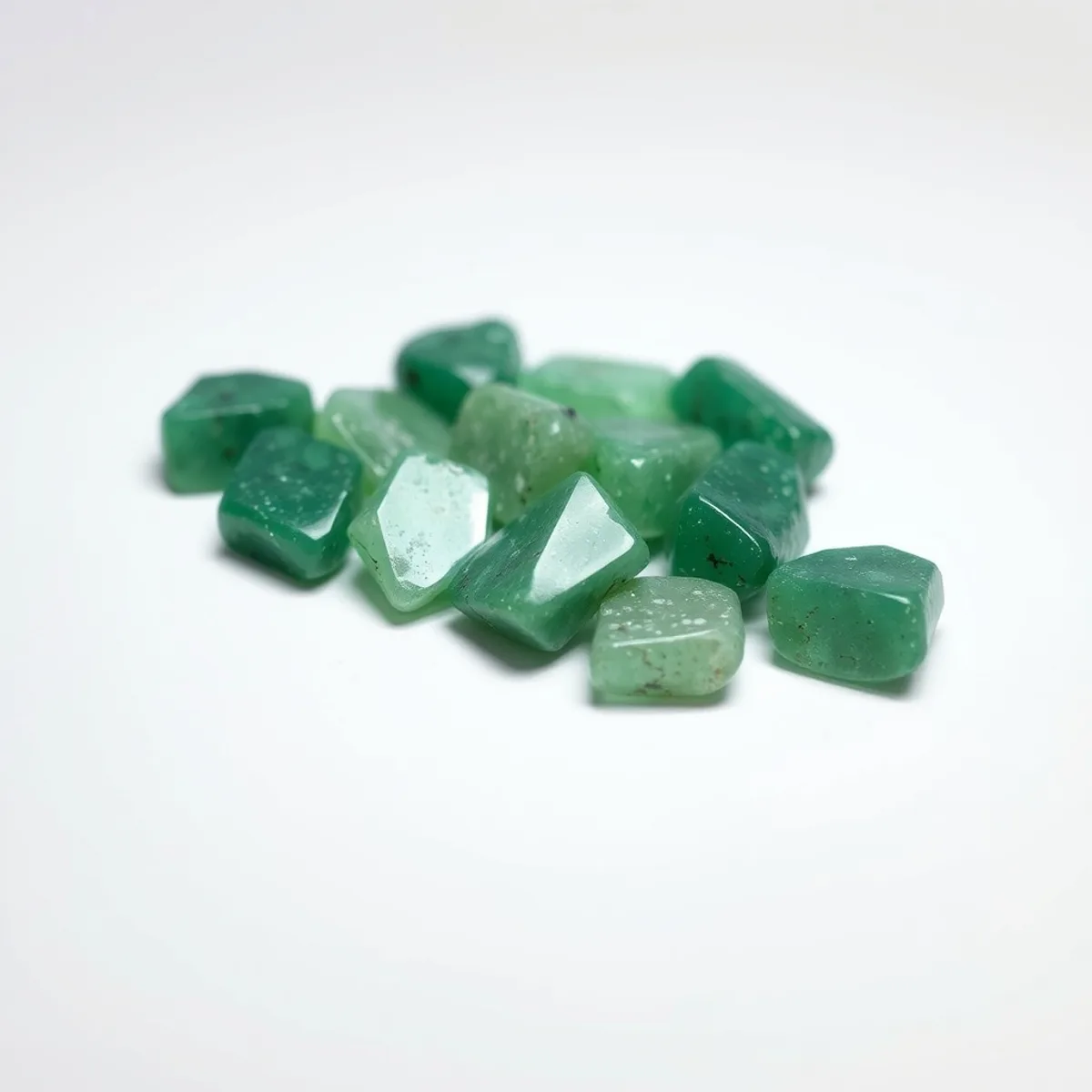
Green Aventurine, the Gentle Lucky Stone
The stone most commonly gifted for new beginnings. Where the sparkle comes from, why it has kept its association with luck for centuries, and why we are cautious about how luck gets marketed.
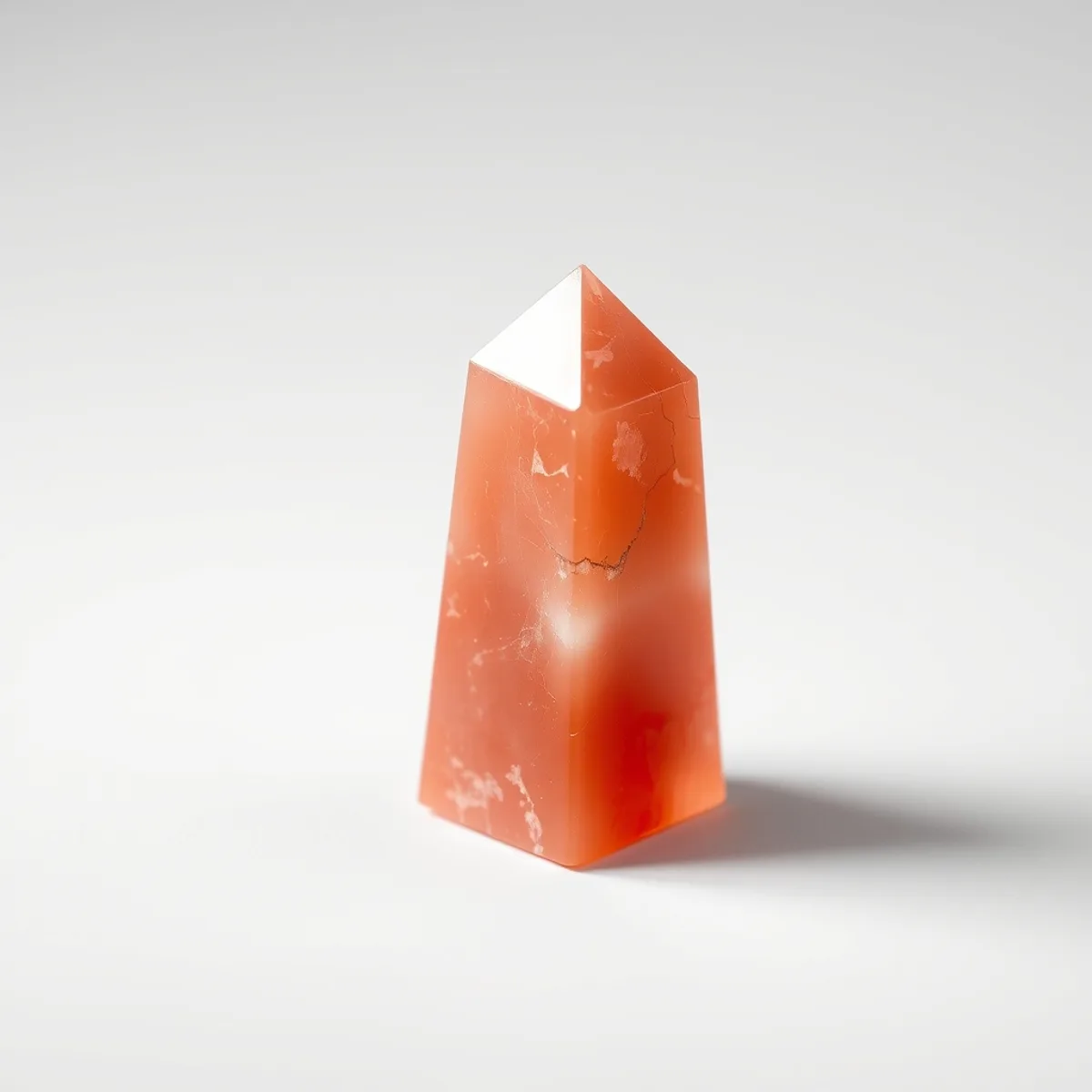
Carnelian, the Warm Stone That Gets You Moving
Red orange chalcedony that shows up on ancient jewelry, Roman signet rings, and Egyptian burial goods. Why the stone has been associated with courage for three thousand years, and what the heat treatment question means for modern buyers.
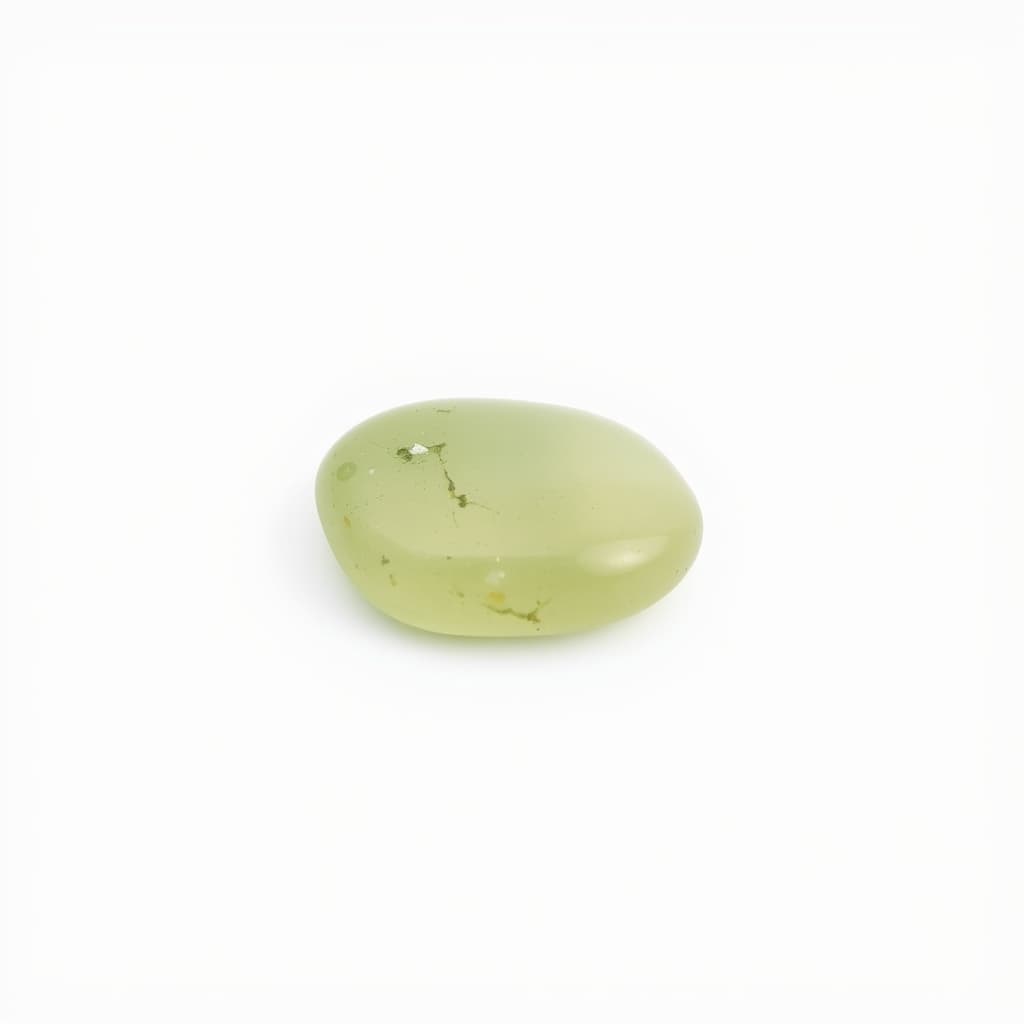
Prehnite, the Stone That Heals the Healer
A pale green calcium aluminium silicate often threaded with black epidote needles. Where the unusual translucent glow comes from, and the long tradition of keeping one near people who look after others.
Mentioned in
Sit with us on Sundays.
One quiet letter every week. New writing, a crystal to consider, and whatever we have been thinking about. No tracking pixels, no affiliate noise.
By subscribing you agree to receive weekly emails from AU Crystals. Unsubscribe anytime. See our privacy note.