
Citrine, and the Quiet Trouble With Most of What You Buy
Real citrine is one of the rarer quartz varieties. Most of what sells under the name is heat treated amethyst. Here is how to tell the difference, why it matters, and what the stone traditionally stood for before any of that got complicated.
At a glance.
Quick read- ChakraSolar Plexus (Manipura)
- Mohs hardness7
- Mineral familyQuartz
- OriginCongo, Madagascar, Russia (natural), Brazil (heat treated)
- ColourPale lemon to honey amber
- ElementFire
- ZodiacLeo, Gemini, Aries
- Sits well withSteadiness before hard conversations, morning practice
- Water safeYes
- Sun safeFades slowly in long direct sun
- RarityNatural is uncommon, heat treated is common
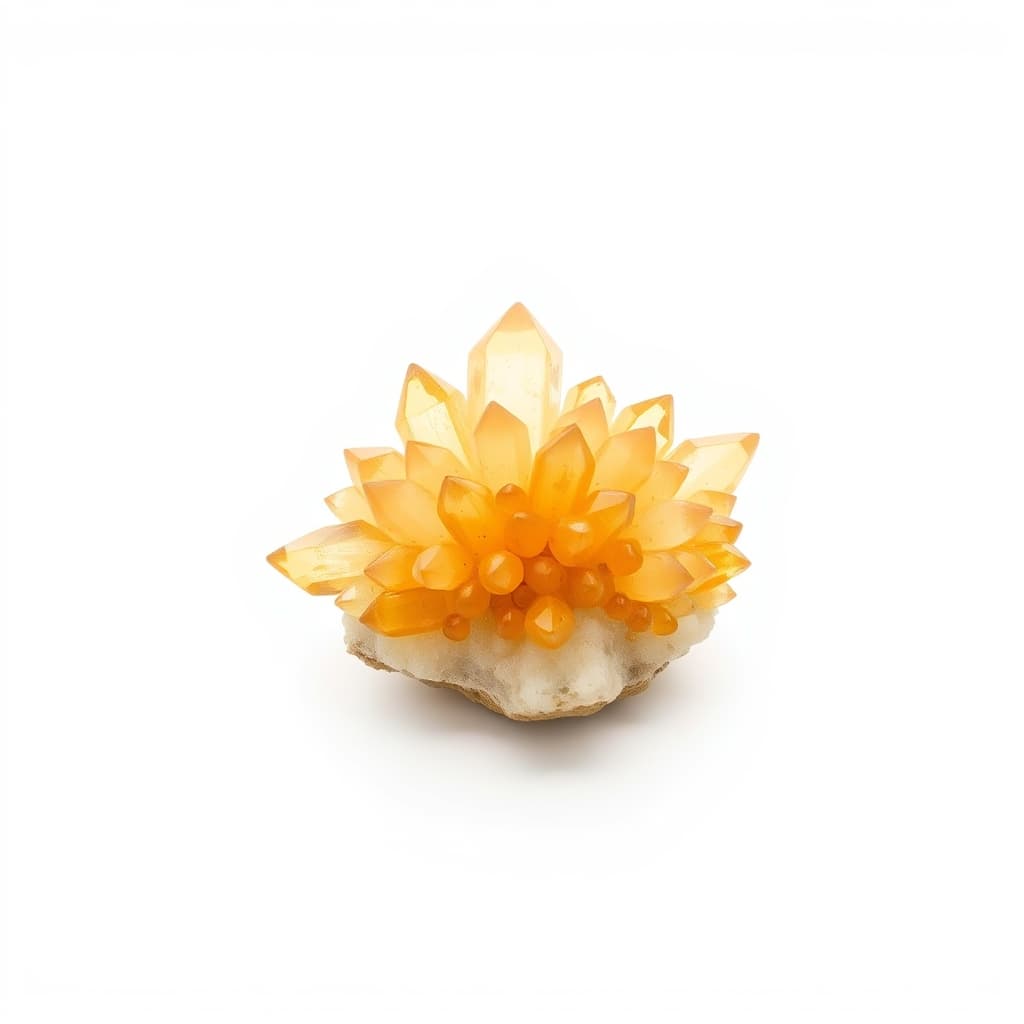
Citrine has a quieter problem than most crystals. If you walk into an average shop and ask for a citrine geode, you will almost certainly be sold heat treated amethyst. This is not a scam in the legal sense. It is an industry norm. But it means a lot of people never see actual natural citrine in their lives, and the two stones look and feel different enough that it is worth knowing which one you have.
What citrine actually is
Citrine is a yellow variety of quartz, coloured by trace iron within the crystal structure. Natural citrine forms through geological heat and pressure deep in the earth, and the result is usually a pale, soft yellow with gentle tonal variation. Deeper, almost orange citrine does occur naturally but is uncommon.
The chemistry is almost identical to amethyst. Both are iron bearing quartz. The difference is temperature history. Below around 470 degrees Celsius, the iron sites in the crystal lattice produce purple. Above that temperature, they shift to yellow. Nature accomplishes this slowly, over geological time, in specific conditions. Industry accomplishes it in a kiln in a few hours.
The heat treatment question
Most of the citrine on the market today is heat treated amethyst from Brazil. Large Brazilian amethyst geodes are baked at high temperatures until the purple shifts to yellow, then cut and sold as citrine. The process is stable, and the result passes most casual identification. Side by side, here is how they actually differ.
| Natural citrine | Heat treated amethyst | |
|---|---|---|
| Colour | Soft lemon to honey, cooler tone | Intense, almost orange yellow |
| Evenness | Gentle variation across the stone | Strong at the tips, white or clear at the base |
| Typical origin | Congo, Madagascar, Russia | Brazil |
| Price | Several times higher for equivalent size | Entry to mid |
| Tradition fit | Matches older folklore | Modern industrial stone |
None of this is to judge the heat treated trade. It is a legitimate industrial process, and the resulting stones are real quartz. It is simply worth knowing what you are buying and what you are paying for.
The traditional associations
Citrine is most often linked to the solar plexus chakra, Manipura, which sits above the navel. In the yogic system, this centre governs confidence, personal will, and the sense of agency a person brings to their own life. The soft yellow colour and the warmth it seems to hold in natural light align with that association in an intuitive, almost obvious way.
In the modern crystal lexicon, citrine is also called the merchant stone or the abundance stone. This is newer language, largely twentieth century, but it draws on older associations between yellow gems and solar energy across many traditions. Whether you take the prosperity framing seriously or lightly, the older thread, warmth, agency, steady light, is worth keeping in mind when you sit with the stone.
Living with a piece
A few small practices that feel natural.
Keep it where light falls through it. Citrine is one of the few crystals that genuinely photographs better in morning sun. A windowsill in the kitchen, away from long direct afternoon exposure, is a classic placement.
Hold it during work that asks for steadiness. Before a difficult conversation, a presentation, or a negotiation, some people hold a small tumbled piece for a few breaths. The mechanism is the same as any grounding practice, namely shifting attention into the body before speaking. The stone is a prompt.
Pair it with clear quartz if you want a slightly more practiced feel. The two look beautiful together, and the combination is traditional.
Wear it. Citrine jewelery has been made continuously for at least two millennia, which suggests the impulse to keep it close is not a recent marketing idea.
Caring for citrine
Both natural and heat treated citrine can fade with long exposure to direct sunlight. Morning light through a window is generally fine. Full summer afternoon sun through south facing glass will gradually dull the colour over years.
Beyond that, citrine is a 7 on the Mohs scale and handles ordinary wear without trouble. Wash with cool water, avoid steam cleaning, and store away from harder gems that might scratch it.
A last word on origin
If you are buying citrine and it matters to you that the piece formed naturally, ask the dealer directly. A trustworthy dealer will tell you plainly whether the stone is natural or heat treated. Most pieces in the mid range market are heat treated, and that is fine if you know. The problem is not the treatment. The problem is when it is not disclosed.
For a small, honest piece of natural citrine, expect to pay for it. Natural citrine from the Congo is among the most consistent sources, and small tumbles are affordable. A natural geode will cost substantially more than an equivalent heat treated one. Both have their place. Just know which one is sitting on your shelf.
A few honest questions.
Is heat treated amethyst actually citrine?
Technically the chemistry is similar, and it is legally sold as citrine in most markets. Purists consider the two different stones because the colour in heat treated material is produced industrially rather than naturally. Natural citrine is rarer and usually more expensive.
How can I spot heat treated amethyst being sold as citrine?
Look at the colour. Natural citrine is usually a soft, slightly cloudy yellow with gentle variation. Heat treated amethyst tends to be a vivid, almost orange yellow with white tips where the original amethyst structure shows through. If a geode is bright yellow with white backs, it is almost certainly heat treated.
Does it matter which one I buy?
Depends on what you want. For appearance and cost, heat treated material is fine and usually cheaper. For the specific traditional association with a naturally formed stone, or if you care about geological provenance, look for natural citrine from sources like the Congo, Russia, or Madagascar.
Will citrine fade in sunlight?
Both natural and heat treated citrine can fade slowly in strong direct sunlight. Keep good pieces out of windows that receive long afternoon sun.
Keep reading.
Amethyst, at Closer Range
The stone most people meet first. A slower look at where it comes from, why Brazilian and Uruguayan pieces look so different, and what sleep research can and cannot say about keeping one by the bed.
Clear Quartz, the One That Does a Bit of Everything
Called the master healer in tradition and used in nearly every radio and watch in the twentieth century. A look at what clear quartz actually is, how it earned its reputation, and why it gets recommended for almost everything.
Rose Quartz, Honestly
Most of what gets written about rose quartz is a bit breathless. Here is a quieter guide, with the geology, the tradition, and a few honest notes on what crystal skincare can and cannot do.
Sit with us on Sundays.
One quiet letter every week. New writing, a crystal to consider, and whatever we have been thinking about. No tracking pixels, no affiliate noise.
By subscribing you agree to receive weekly emails from AU Crystals. Unsubscribe anytime. See our privacy note.